Why Switch from LPG to a Heat Pump Hot Water System?
For many homes, hot water is one of the largest energy costs. According to EECA, hot water heating accounts for approximately 30% of the average New Zealand household's energy use. EECA also notes that hot water heat pumps typically use around 60-75% less electricity than conventional electric hot water cylinders, making them one of the most energy-efficient options available for residential hot water heating.
With a 45kg LPG bottle now commonly costing over $150 plus ongoing bottle rental fees, the cost of producing hot water can add up quickly.
For a typical Canterbury household with four occupants, switching from LPG hot water to a heat pump hot water system can reduce annual hot water costs by around $1,200 per year, depending on usage patterns and energy prices.
As LPG prices continue to increase, these savings are likely to become even more significant over time. In fact, EECA's analysis found that heat pump hot water systems typically have the lowest total cost of ownership over a 10-year period when compared with both electric hot water cylinders and continuous-flow gas water heaters.
Understanding the Difference
An LPG instantaneous water heater has a very high heating capacity, allowing it to heat water instantly as it passes through the unit.
A heat pump hot water system works differently. Instead of heating water on demand, it stores hot water in a cylinder and uses a heat pump to gradually reheat the stored water over several hours. This is similar to how a conventional electric hot water cylinder operates.
Because of this, correctly sizing the system is critical. The hot water requirements of the home should be assessed against the performance of the heat pump and cylinder to ensure there is sufficient hot water available during periods of high demand.
Another important consideration is outdoor temperature. Heat pumps become less powerful as outdoor temperatures drop, meaning winter performance needs to be considered when selecting a system. A properly designed system should be assessed using winter operating conditions so that hot water performance remains reliable during the coldest months of the year.
What Types of Heat Pump Hot Water Systems Are Available?
At HPAC, we offer a range of high-quality heat pump hotwater systems that generally fall into two categories.
Split Systems
Split systems use a separate heat pump unit and hot water cylinder connected by pipework.
This design offers greater flexibility because the cylinder can be located separately from the outdoor heat pump. This can be useful when managing noise or working within existing building layouts.
The Daikin and Panasonic systems we offer use CO2 refrigerant, which is one of the most environmentally friendly refrigerants available. It is particularly effective at heating water from cold temperatures and can deliver excellent efficiency.
Integrated Systems
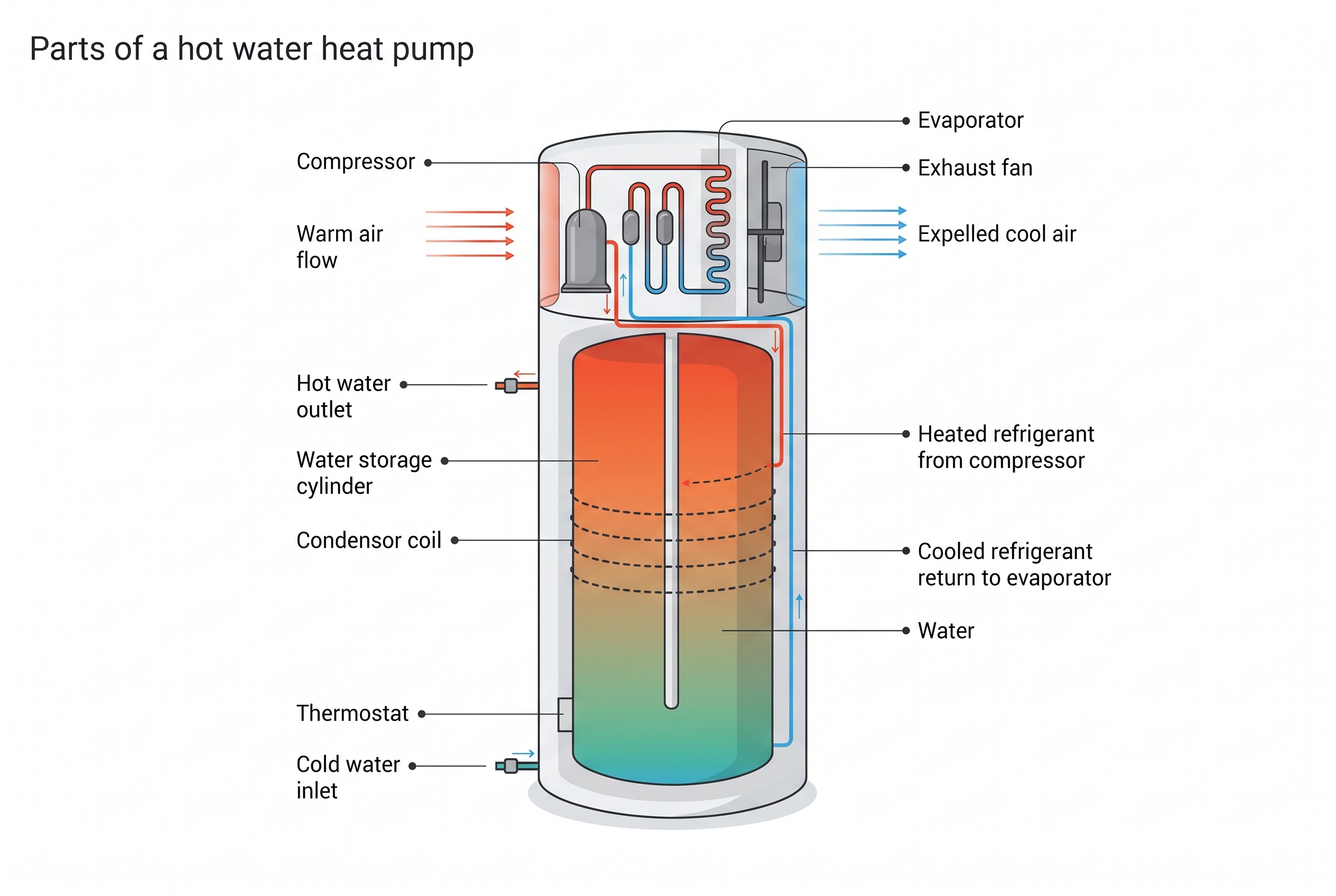
Integrated systems combine the heat pump and hot water cylinder into a single unit, with the heat pump mounted directly on top of the cylinder.
These systems simplify installation and require no interconnecting pipework, making them a popular option for many homes.
The Gree and Haier systems we supply typically use R290(propane) refrigerant, which allows water temperatures of up to 70°C and provides strong performance when reheating the cylinder after smaller hot water draw-offs.
Where Will the New System Be Installed?
In most retrofit projects, the new heat pump hot watersystem is installed in the same location as the existing LPG water heater.
This often allows existing plumbing and electrical services to be reused, helping to reduce installation costs. However, some installations may require electrical upgrades depending on the selected system and the home's existing power supply.
Installation Requirements and Common Challenges
Heat pump hot water systems must be installed on a stable, level foundation.
If a concrete patio or slab already exists, this can often be used. Otherwise, a new concrete base may need to be installed.
The New Zealand Building Code also requires hot water cylinders to be securely restrained. In existing homes, locating suitable structural framing from the outside can be difficult, particularly when retrofitting larger cylinders.
To ensure compliance and earthquake restraint requirements are met, additional framing or a dedicated mounting structure is often required. This helps protect both the cylinder and the surrounding building in the event of seismic activity.
What Does a Heat Pump Hot Water Upgrade Cost?
The installed cost of a heat pump hot water system typically ranges between $7,500 and $12,000, depending on:
- The selected system
- Cylinder size
- Installation location
- Electrical upgrade requirements
- Foundation and mounting requirements
- Plumbing modifications
At HPAC, every project is individually assessed and quoted to ensure all required work is included upfront, helping to avoid unexpected costs later.
Based on annual savings of approximately $1,200, the simple payback period is typically around 6 to 10 years, with future LPG price rises likely to improve the return on investment.
Green Home Loan Funding
Many heat pump hot water upgrades are eligible for Green Home Loan programmes offered by participating New Zealand banks.
These loans often provide low-interest or interest-free funding over a three to five-year period, helping homeowners spread the installation cost while immediately benefiting from lower energy bills.
HPAC can provide the documentation and technical information required to support your loan application.
Ongoing Maintenance
Like any hot water system, regular servicing is recommended to ensure efficient and reliable operation.
An annual service allows the heat pump system to be checked, cleaned and tested to maintain performance and identify any developing issues before they become costly repairs.
Some systems also contain a sacrificial anode that should be inspected periodically. Depending on the system, this can often be checked by the homeowner or completed by a plumber during routine maintenance.
Thinking About Making the Switch?
A heat pump hot water system can significantly reduce ongoing hot water costs while improving energy efficiency and reducing reliance on LPG.
HPAC can assess your home's hot water requirements, recommend the most suitable system, and provide a professional installation that is compliant, efficient and designed to perform reliably for years to come.
Contact HPAC today for a free heat pump hot water assessment and quote.
Further Reading
For independent information on heat pump hot water systemsand their performance in New Zealand homes, see:
EECA - Hot Water Heat Pumps in the Home
https://www.eeca.govt.nz/insights/eeca-insights/hot-water-heat-pumps-in-the-home/