What Is a Heat Pump Water Heater?
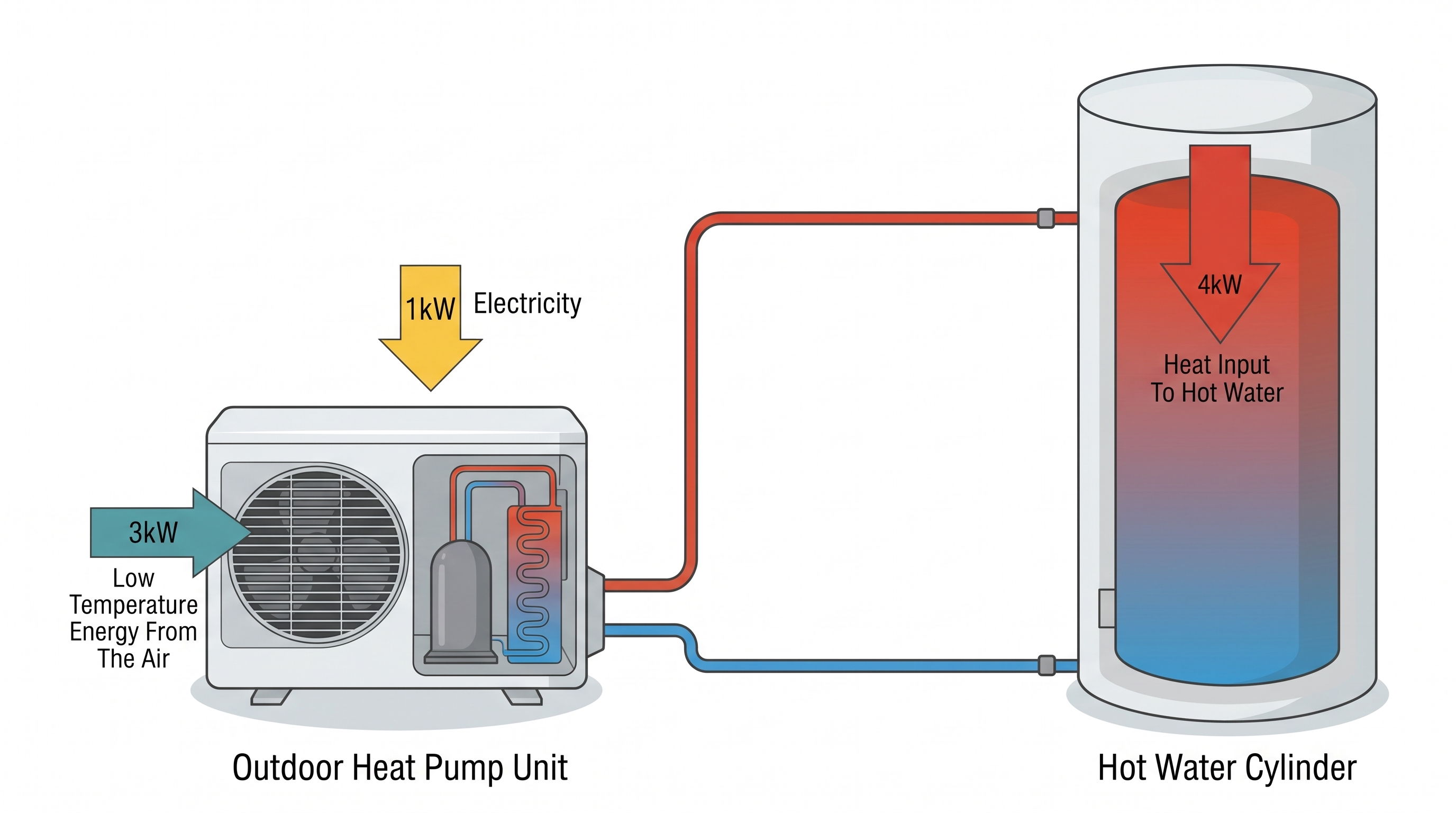
A heat pump water heater uses electricity to move heat from the surrounding air into water stored in a hot water cylinder. Rather than generating heat directly, like a traditional electric element, it transfers low temperature energy from the air into high temperature energy to heat the hot water.
This process is similar to how a standard air conditioning heat pump works when heating a home, except the heat is transferred into water instead of indoor air.
How Does a Heat Pump Water Heater Work?
A heat pump captures energy from the surrounding air and, using the refrigeration cycle and a small amount of electricity, upgrades this low-temperature energy into high-temperature energy that can be used to heat water. This process is similar to the refrigeration cycles used in the early 19th century and while the refrigerants and equipment used to do this have changed drastically since then the principles of shifting energy from one form to another are the same.
The system uses four key components:
- Evaporator - absorbs heat from the outside air.
- Compressor - increases the temperature of the refrigerant.
- Heat Exchanger - transfers heat from the refrigerant into the water.
- Expansion Valve - reduces refrigerant pressure before the cycle repeats.
Even on cold winter days, there is still heat energy available in the outdoor air. The heat pump captures this energy and concentrates it to produce hot water efficiently.
This process operates automatically, reheating the cylinder whenever additional hot water is required.
Why Are Heat Pump Water Heaters So Efficient?
Traditional electric hot water cylinders use resistance elements to convert electricity directly into heat. For every 1kWh of electricity consumed, approximately 1kWh of heat is produced.
A heat pump water heater can typically achieve a Coefficient of Performance (COP) of 3 to 5 under favourable operating conditions. This means that for every 1kWh of electricity consumed, the system can deliver 3-5kWh of heat into the water.
In practical terms, many homeowners can reduce their hot water energy consumption by 60-75% compared to a conventional electric cylinder.
Are Heat Pump Water Heaters Suitable for Canterbury Homes?
Despite Canterbury's cold winter mornings, modern heat pump water heaters perform very well throughout the region and are suitable for most homes when correctly sized.
However, unlike electric elements, heat pump performance varies with outdoor temperature. As temperatures fall, heating capacity and efficiency also reduce.
This makes correct system sizing important. The cylinder volume and heat pump capacity should be selected based on:
- Number of occupants
- Hot water usage patterns
- Peak hot water demand
- Winter operating conditions
- Future household requirements
A properly designed system should be assessed using winter performance data to ensure adequate hot water is available during the coldest periods of the year.
What Types of Heat Pump Water Heaters Are Available?
Most residential heat pump water heaters fall into one of two categories.
Split Systems
Split systems use a separate outdoor heat pump connected to an indoor or outdoor hot water cylinder.
Advantages include:
- Greater installation flexibility
- Reduced noise near living areas
- Larger cylinder options
- Proven performance in colder climates
Examples of this type of hot water heat pump system are the Daikin and Panasonic CO₂ units.
Integrated Systems
Integrated systems combine the heat pump and cylinder into a single factory-assembled unit.
Advantages include:
- Simpler installation
- Compact footprint
- Lower installation costs in some situations
- Fewer components
Examples of this type of hot water heat pump system are the Gree Whio and Haier 500 series units.
Installation Requirements
Heat pump water heaters have different installation requirements than traditional gas water heaters or electric cylinders.
Key considerations include:
- Location: The heat pump requires access to a sufficient volume of fresh air to operate efficiently.
- Foundation: Outdoor units and integrated systems require a stable, level base, typically a concrete slab or paved area.
- Electrical Supply: Most systems require a dedicated electrical circuit. Older homes may require switchboard or cabling upgrades.
- Cylinder Restraint: New Zealand Building Code requirements generally require cylinders to be restrained against seismic movement. Additional framing or mounting structures may be required when retrofitting into existing homes.
- Condensate Drainage: Like an air conditioning system, a heat pump produces condensate water that must be drained correctly.
- Maintenance Considerations: Heat pump water heaters are generally reliable and require relatively little maintenance, but regular servicing will help maintain efficiency and maximise service life. Annual maintenance should typically include:
- Cleaning heat exchanger coils
- Inspecting electrical connections
- Checking refrigerant system operation
- Cleaning condensate drains
- Reviewing controller settings
- Verifying operating temperatures and performance
- Many hot water cylinders also contain a sacrificial anode that helps protect the tank from corrosion. Depending on the manufacturer's recommendations and water quality, this should be inspected and replaced when required.
Is a Heat Pump Water Heater Worth It?
For many New Zealand homes, the answer is yes.
While the upfront cost is higher than a conventional electric cylinder, the significantly lower running costs can provide substantial long-term savings. Households with higher hot water usage typically see the greatest financial benefit.
For homeowners replacing an ageing electric cylinder, LPG water heater, a heat pump water heater is often one of the most effective ways to improve energy efficiency and reduce operating costs.
Talk to the Hot Water Heating Experts
At HPAC, we design and install heat pump water heating systems throughout Canterbury. Our team can assess your home's hot water requirements, recommend the most suitable system, and ensure the installation is compliant, efficient, and sized correctly for your household's needs.
Contact HPAC today for a free heat pump water heating assessment and quote.
Further Reading
For independent information on heat pump hot water systems and their performance in New Zealand homes, see:
EECA - Hot Water Heat Pumps in the Home
https://www.eeca.govt.nz/insights/eeca-insights/hot-water-heat-pumps-in-the-home/